Safeguarding AI Usage for Water Technologies in Egypt: Youth Policy Paper
Youth-led recommendations for the responsible use of AI in Egypt’s water sector — developed by the EU Jeel Connectors at Cairo Water Week 2025 as a joint declaration with ACG.
Download the full PDFOpen in the interactive readerاقرأ بالعربية
Preamble
Water resources, fundamental to life and development, are under increasing pressure from human activity and a changing climate. Egypt has long led global and regional efforts for sustainable water management — as reflected in the 1994 resolution at the Eighth World Water Congress in Cairo that led to the creation of the World Water Council 1.
Modern technologies such as Artificial Intelligence present both transformative opportunities and ethical challenges for Egypt’s water goals. AI tools can improve efficiency, reduce water losses and inform evidence-based policy — yet they raise new questions of data sovereignty, fairness, accountability and inclusion. Ensuring AI is developed and applied responsibly, equitably and in line with Egypt’s environmental, social and development priorities is an urgent national and regional imperative.
The European Union and Egypt share a long partnership on water and sustainable development, grounded in the EU–Egypt Partnership Priorities (2021–2027) 2, Water and Environment Support (WES, 2019–2024) 3, and PRIMA and Horizon Europe collaborations 4. Globally, the UNESCO Recommendation on the Ethics of Artificial Intelligence (2021) was adopted by 193 Member States 5, and an Independent International Scientific Panel on AI was established under the 79th UN General Assembly 6. Some regions have advanced legal frameworks, such as the EU AI Act of 2024 7, while others keep open environments to accelerate innovation. Egypt is well positioned to balance innovation and regulation by embedding ethical principles in emerging AI-for-water solutions.
Developed by the EU Jeel Connectors during a two-day town hall at Cairo Water Week 2025, as a joint declaration with ACG – Abdin’s Consultancy Group.
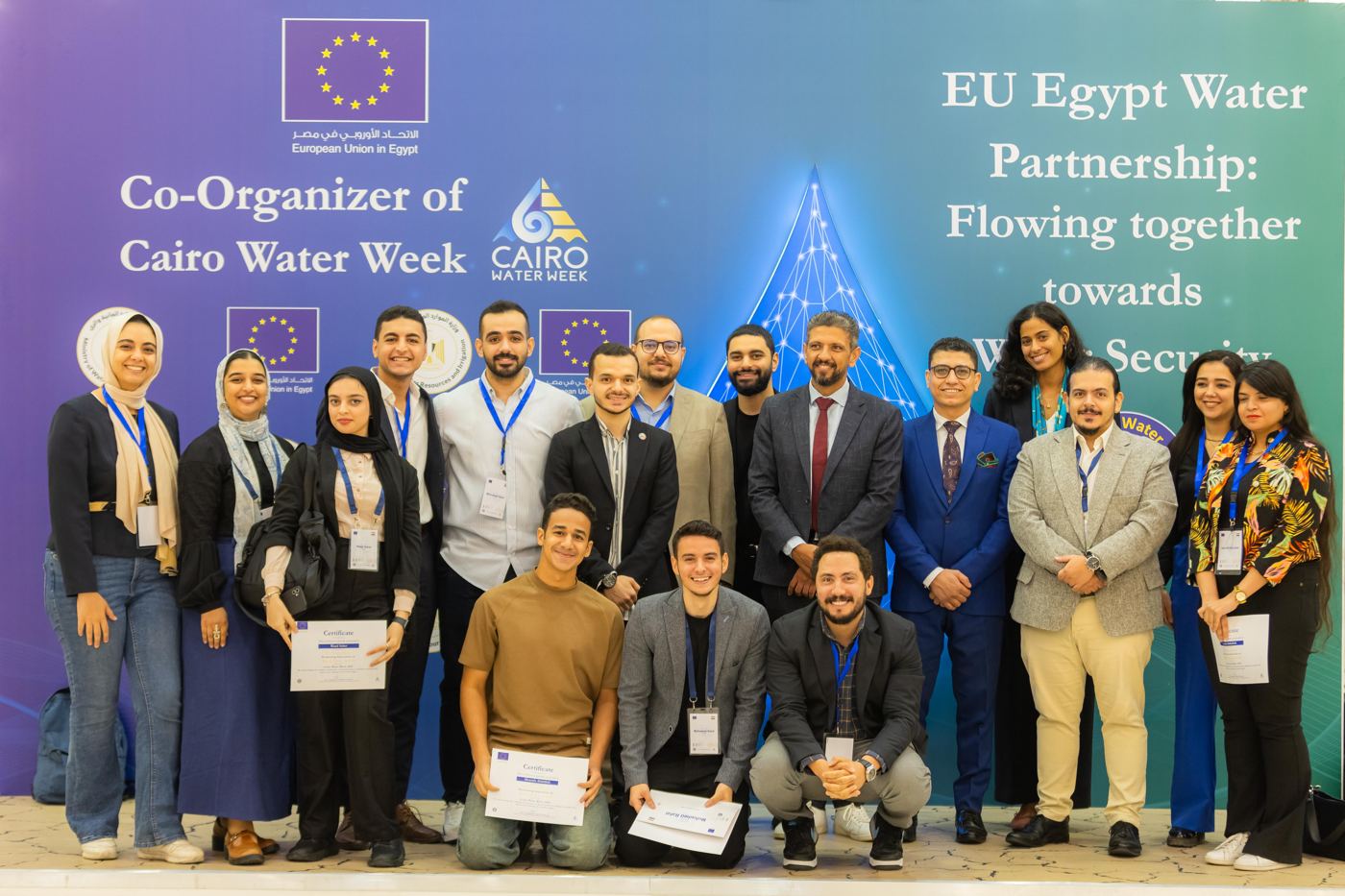
The recommendations were announced at the EU AI & Innovation Hackathon on 15 October 2025. They reflect perspectives from engineering, environmental science, health, social innovation and policy, and emphasise inclusive governance, data ethics and capacity-building.
1. Institutional, regulatory and data governance frameworks
1.1 A Prime Ministerial Decree for responsible AI
Increase political will and cross-ministerial effort through the National Council for AI to create laws and regulations for the safe and ethical use of AI in Egypt.
1.2 Localised AI licensing and certification
Develop a national AI software licensing framework requiring providers and startups to be certified before deploying in water-related systems — mirroring EU-style voluntary codes of practice, such as the General-Purpose AI Code of Practice (2025) and GDPR, while embedding Egypt-specific safety and ethics standards.
1.3 Transparent liability and accountability
Deploying AI without clear accountability erodes public trust and can lead to misinformed water-management decisions. Mandate coordination between the National Council for Artificial Intelligence, the Egyptian Digital Government Authority and the Ministry of Water Resources and Irrigation to define shared oversight responsibilities.
1.4 Environmental assessment of AI technologies
Establish lifecycle assessments of AI technologies — from product design to end-of-life waste — including thresholds for sustainable water use and treatment in data-centre cooling, to limit pollution and pressure on water scarcity.
2. Education, capacity building and ethical competencies
2.1 National guidelines and training on AI in the water sector
Develop unified national guidelines on AI literacy, integrated across technical institutions — vocational schools and universities — to prepare early-career professionals for the digital transformation.
2.2 Ethical capacity for AI developers in water technologies
Build capacity in data ethics and environmental impact, especially for software and data engineers: national curricula and certification in AI and water technologies with universities and technical institutions, upskilling through EU–Egypt exchange programmes, and joint AI-water knowledge programmes.
3. Responsible areas of implementation
3.1 A national AI architecture
Develop national and localised data sources for contextually relevant language models that support decision-making by ministries and water users.
3.2 A framework for AI in water-using domains to build community resilience
AI can support early-warning systems, detect ageing infrastructure and improve efficiency for more equitable water distribution, including in marginalised communities. A guidance framework naming priority domains — such as the Water–Energy–Food–Ecosystems (WEFE) Nexus — can steer developers towards Egypt’s sustainable water needs.
4. Inclusivity, awareness and social safeguards
4.1 Social assessments of AI use
Assess the socio-economic effects of AI in key water domains such as agriculture and industry, identify risks to workers and public rights, and plan safeguards for fair and equitable sharing of benefits.
4.2 Upskilling for an AI-ready water workforce
Establish upskilling and training for workers in water utilities, agriculture and industry to support their transition as systems management becomes data-driven.
4.3 A national communication and community engagement strategy
Responsible, accessible AI depends on informed citizens. A platform connecting water users — such as smallholder farmers through agricultural extension services — with developers and policymakers would share standards, best practices and training.
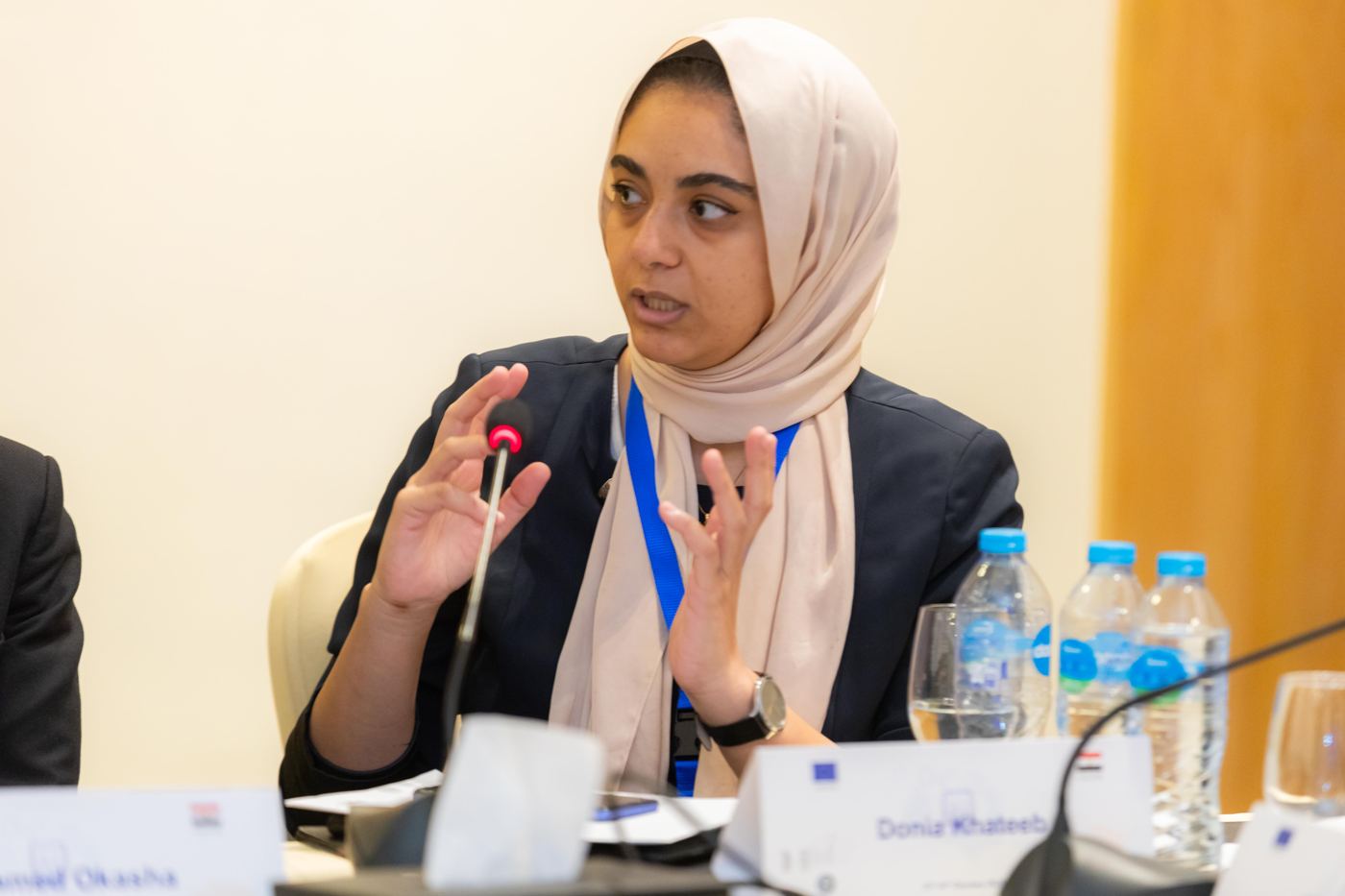
In pictures: the youth town hall at Cairo Water Week 2025
Select any photo to view it full-screen.
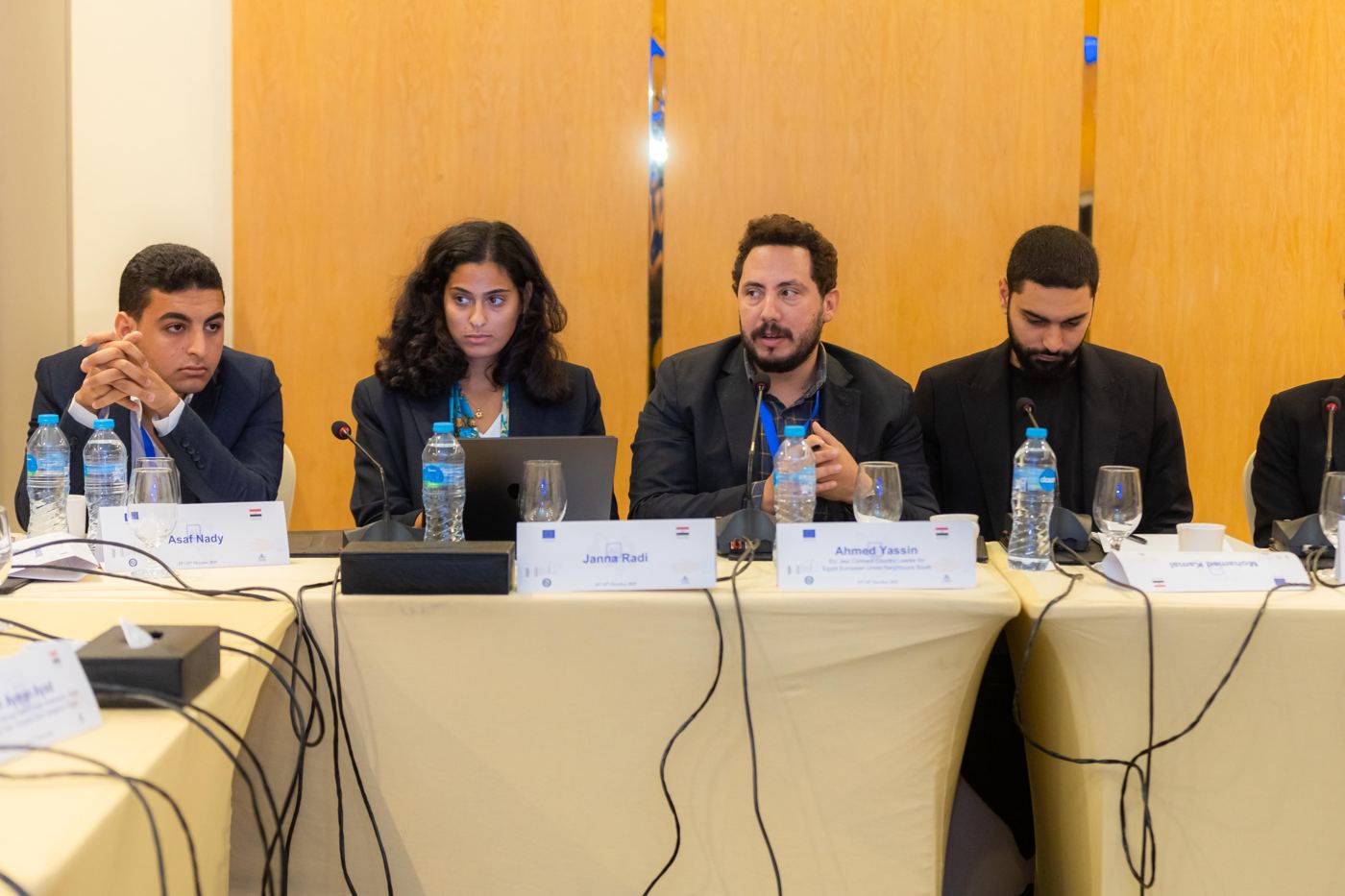
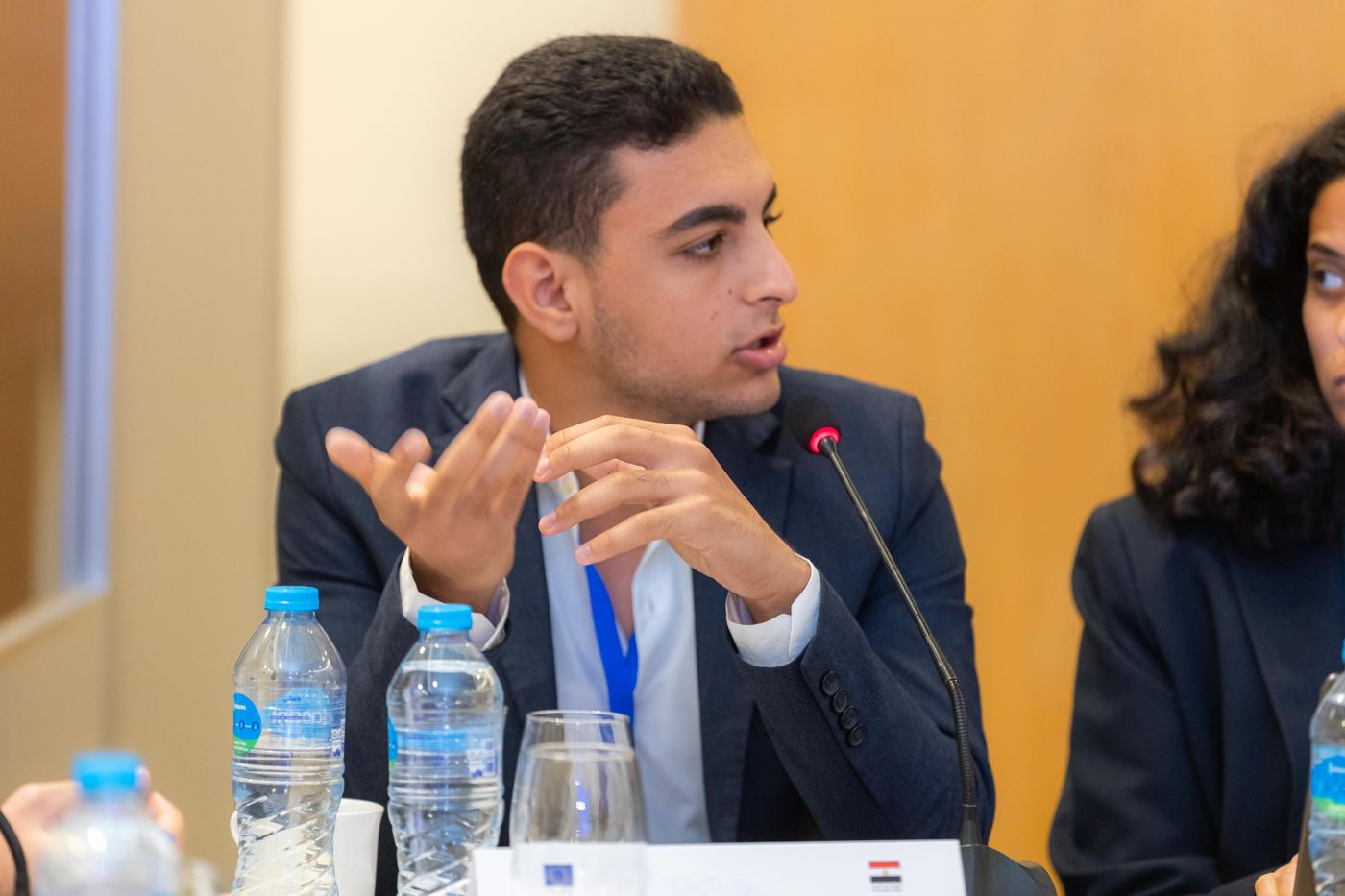 A youth delegate sets out recommendations during the town hall
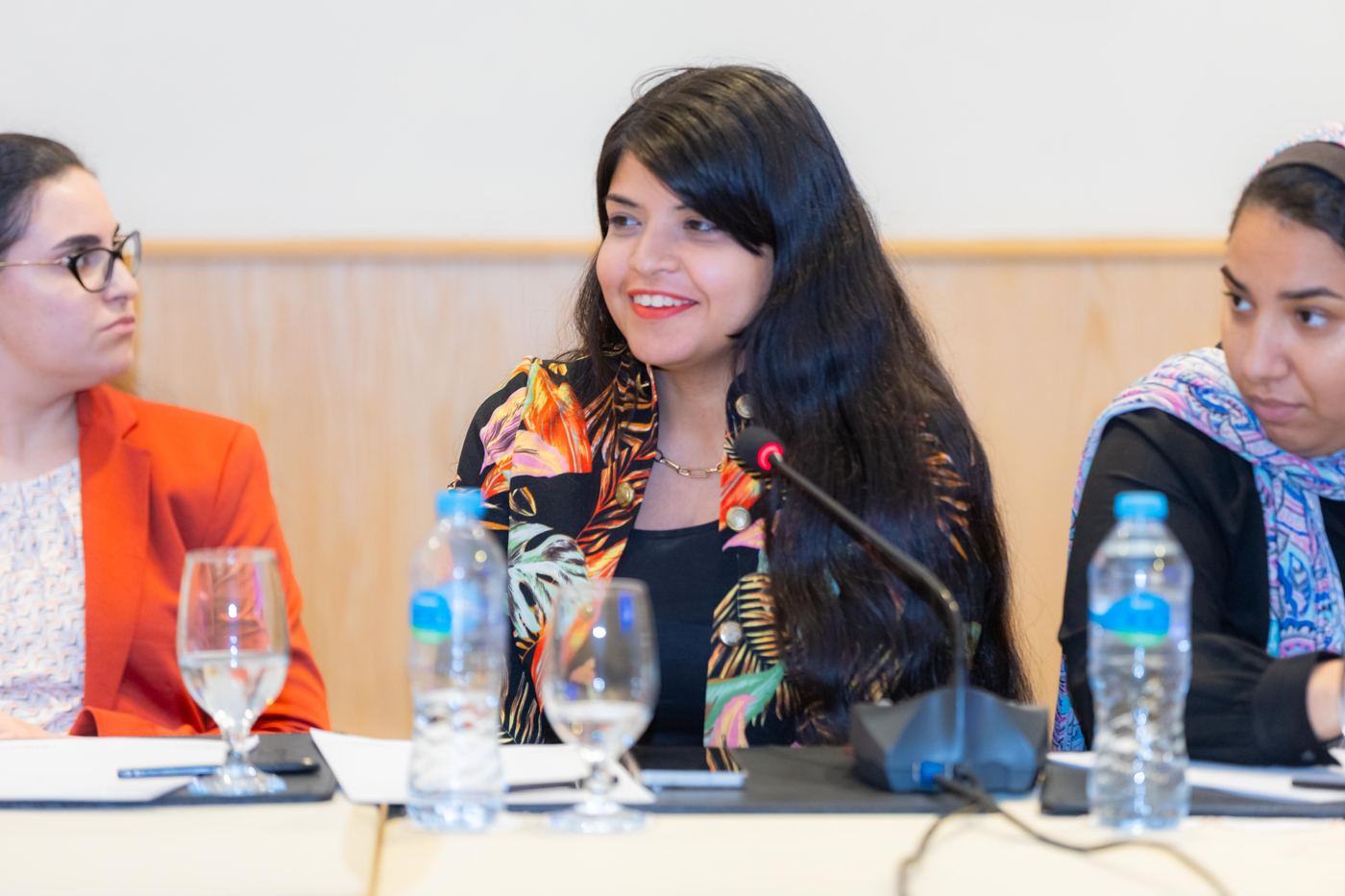 Discussing inclusion and social safeguards for AI in the water sector
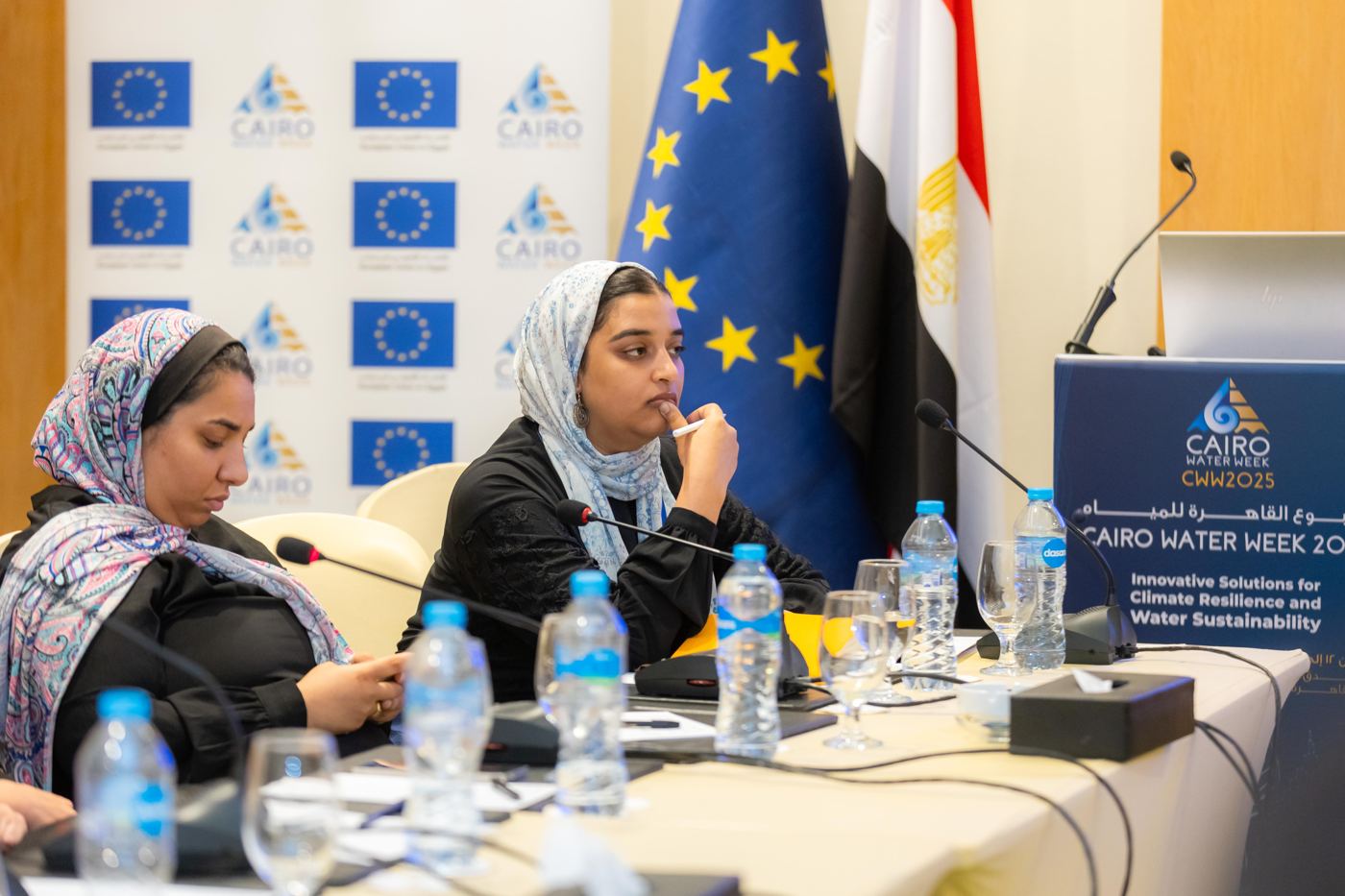 Cairo Water Week 2025: innovative solutions for climate resilience and water sustainability
References
- World Water Council — History
- Joint Declaration on the Strategic and Comprehensive Partnership between Egypt and the EU (2024)
- Water and Environment Support (WES) — Egypt
- EU and Egypt conclude PRIMA negotiations; Horizon Europe 2025 launch in Cairo
- UNESCO Recommendation on the Ethics of Artificial Intelligence (2021)
- UN General Assembly Resolution A/RES/79/325
- EU Artificial Intelligence Act